
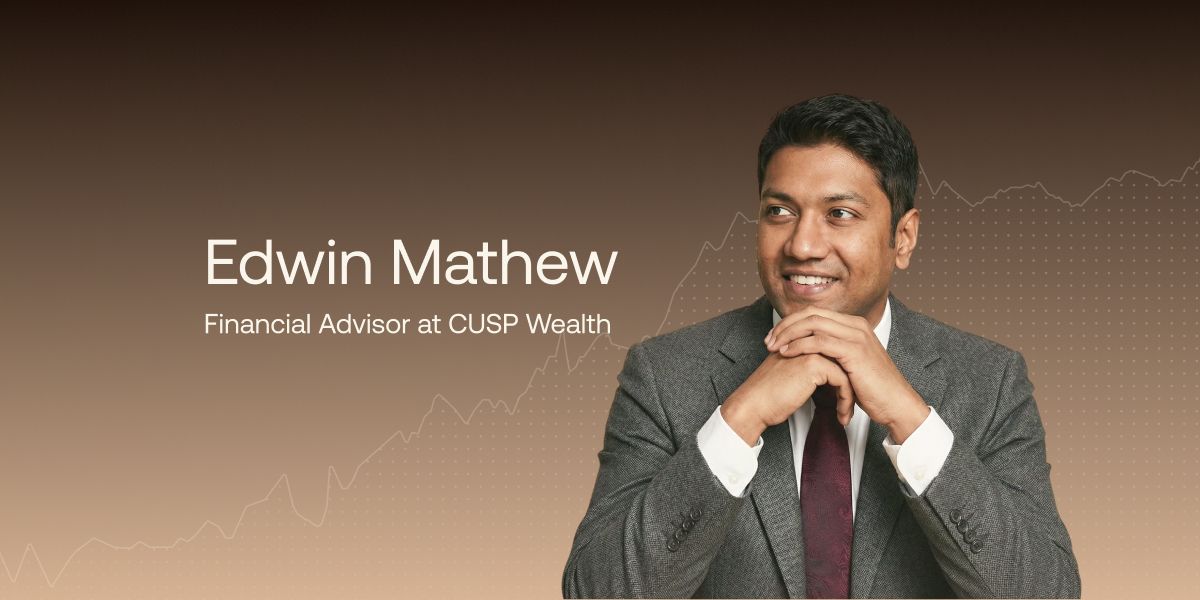
Why many first-time investors get it wrong – and how to approach investing differently
What are the most common investment mistakes you see among first-time investors in the GCC region?
The most recurring pattern I see is chasing performance. Investors see a neighbour or colleague profit from a hot stock or crypto asset, and they jump in near the peak. By the time news of strong returns reaches dinner conversations, the opportunity has usually passed.
The second mistake is treating real estate as the only legitimate investment. While property has created generational wealth across the Gulf, over-concentration in a single illiquid asset class is a real risk, especially as rental yields compress in some markets.
Third, and perhaps most damaging, is starting late. The power of compounding is extraordinary, but it requires time. Even modest monthly contributions in your 20s may outperform over the long term larger lump sums started in your 40s.
How should someone with a moderate income in the Gulf start building an investment portfolio today?
Investors may start with an emergency fund, three to six months of living expenses in a liquid account. But don’t forget to evaluate your financial situation, investment objectives, and risk tolerance. Without it, any market downturn can force you to sell investments at the worst possible time.
Once that foundation is in place, a consistent amount per month can be transformative over a decade. You might consider proceeding with low-cost index funds or ETFs tracking global markets. Modern platforms are accessible from the GCC, making this straightforward today.
Lastly, it is always a good idea to automate your contributions so the decision is taken out of your hands. Behavioural consistency matters far more than any other aspect.
What role does diversification play, and which asset classes are most relevant for investors in this region?
Diversification is one of those concepts that sounds simple, but most investors don't actually practice it. The idea is straightforward: spread your risk across different assets so that when one area struggles, another holds steady. Done well, it reduces your overall risk without meaningfully giving up returns.
For GCC investors specifically, I'd think about it across three dimensions: geography, asset class, and currency.
Most Gulf investors already have real estate exposure, often quite heavy exposure, whether that's a family home, an investment property, or both. That's a starting point, but it's not a portfolio. Complementing that with global equities, fixed income, and commodities gives you a much more resilient base.
Gold deserves a special mention here. It holds cultural significance in the region and can play a role as an inflation hedge and a store of value during periods of uncertainty. It may therefore be considered for inclusion in a GCC portfolio for practical as well as traditional reasons. However, gold prices can be volatile and, unlike income-generating assets, it does not provide regular income.
And don't overlook currency diversification. Most GCC currencies are pegged to the USD, which brings stability, but it also means your entire wealth can be exposed to one currency bloc. Holding international assets naturally gives you broader exposure and an added layer of protection.
How important is Shariah-compliant investing, and what options are available for investors who prefer it?
It's critically important for a significant portion of GCC investors not just as a religious obligation but as an ethical framework many find compelling even outside a religious context. The prohibition on riba (interest), excessive speculation, and investment in harmful industries resonates with values-based investing globally.
The good news is that the Islamic finance industry has matured significantly. Today, investors have access to Shariah-compliant equity funds, sukuk (Islamic bonds), Islamic REITs, and even Shariah-screened ETFs. Platforms today are built specifically around this framework.
Performance parity with conventional products has also improved substantially, removing the historic trade-off that once made some investors hesitant.
What strategies would you recommend for long-term wealth building versus short-term gains?
For long-term wealth, which I define as a 10-year-plus horizon, the strategy is clear and straightforward. Boring and simple wins. Consistent contributions, a diversified portfolio, and the discipline to ignore the noise, that's genuinely it. And always remember, time in the market beats timing the market, consistently.
Short-term strategies are an entirely different animal. They require active monitoring, emotional resilience, and an acceptance that most retail traders underperform passive strategies after costs. If you're drawn to active trading, ring-fence a small portion of your portfolio, say 5-10%, for this, and treat it separately from your wealth-building core.
How can investors protect their portfolios during periods of high inflation or economic uncertainty?
GCC investors face a double challenge. Inflation hits hard here because so much of what we consume is imported, and regional uncertainty can shake confidence quickly. Here's how I think about protection:
Equities first. I know it feels counterintuitive to stay invested when things look shaky, but pulling out of equities during uncertain times is usually where investors hurt themselves the most. History backs this up consistently.
Real assets. Gold is your friend here – it's been a reliable hedge against both inflation and geopolitical stress for centuries, and it resonates deeply in this region for good reason.
Watch your bond maturities. When inflation rises, central banks raise rates, and that kills long-term bond prices. Keep your sukuk or bond exposure short, one to three years, or opt for floating-rate instruments. Less exposure to rate swings.
Don't put all your eggs in one region. Having exposure to the US and global markets gives you a real buffer. And since GCC currencies are pegged to the dollar, the USD's safe-haven status during global stress actually works in your favour.
The bottom line: don't try to outsmart macroeconomic cycles. A diversified portfolio is your best defence, not perfect timing.
What financial habits or mindset shifts are essential for building sustainable wealth over time?
Stop performing wealth, start building it.
This is a big one in the Gulf. There’s a lot of cultural pressure to show success – the car, the watch, the lifestyle. But sustainable wealth is often built more quietly in a portfolio, rather than parked in a driveway. For some investors, the shift from “looking wealthy” to “being wealthy” can be an important mindset change.
Your bank account is not your savings plan.
A bank account on its own is not necessarily a long-term savings plan. Many people hold large balances in current accounts that may earn little or no return. As a result, some investors may consider setting aside a portion of their income regularly for investing, rather than relying only on what’s left at the end of the month. Approaches such as prioritising savings or investing early can be effective, depending on individual circumstances.
Be consistent, not clever.
For many investors, trying to time the market or chase the next big opportunity may not be necessary. A disciplined approach such as making fixed, regular contributions into a diversified portfolio has historically delivered positive outcomes over the long term, although this is not guaranteed. Sometimes, boring wins.
Think in decades.
The Gulf has a young population, which can be a genuine advantage. A 28-year-old starting today may have 30-plus years of compounding ahead of them – a meaningful head start if used effectively. As always, the suitability of any approach will depend on an individual’s financial situation, investment objectives, and risk tolerance.
Looking ahead, what investment trends or opportunities should GCC investors pay attention to in the next 5–10 years?
Before we even get to trends, I want to say something important. Trends change. Risk appetite changes. Life circumstances change. So before you chase any opportunity, make sure your core portfolio is solid — built around your personal risk tolerance, diversified, and stable. That comes first, always.
Now, anything beyond that sits in what I'd call your satellite portfolio. This is where you can take calculated bets on themes and trends. Just go in with eyes open — these plays carry higher volatility than your core holdings. That's the trade-off for the potential upside.
With that said, here's what I'm watching:
AI. Everyone's talking about AI, and yes, I do think there's real value in the space as long as investment into it continues. But here's the nuance, we're already seeing a rotation within the industry. The obvious plays, the big names, have largely been priced in. The deeper value now might be in what I call the second and third derivative, the picks and shovels of AI. Think the infrastructure layer: data centres, memory chips, enterprise AI software, semiconductor components, etc. , the companies quietly powering the AI boom rather than headlining it.
Energy. The more AI scales, the more power it demands, and that's accelerating investment into clean energy infrastructure globally. Solar, wind, and grid modernisation. Nuclear is also having a genuine renaissance through what's called Small Modular Reactor or SMR technology, attracting serious institutional capital and government backing. And one honest reminder that traditional energy isn't disappearing overnight. Global demand for oil and gas remains robust, and the transition will take longer than the headlines suggest.
Cybersecurity. As the world digitises, the number of targets grows with it. Every company, every government, every hospital is a potential target. Security budgets are rising, and the demand is structural, so it doesn't go away in a downturn. This is one of those quiet, unglamorous themes that I think deserves more attention than it gets.
Disclosure
This material is provided for informational purposes only and does not constitute a personal recommendation or advice or an offer to buy or sell any financial product or security. Any reference to advisors, tools, or portfolios is subject to client onboarding, eligibility, and suitability assessment. Investments involve risk and may result in loss of capital. Past performance is not a reliable indicator of future results. The examples provided are for illustrative purposes. Data shared from third parties is obtained from what are considered reliable sources; however, it cannot be guaranteed. Opinions, news, research, analysis, prices, or other information contained on our Blog, or emailed to you, are provided as general market commentary. CUSP Wealth shall not be liable for any losses arising directly or indirectly from misuse of information. Each decision as to whether a self-directed investment is appropriate or proper is an independent decision by the reader.
Cusp Wealth Ltd is authorised by the Dubai International Financial Centre (DIFC) and regulated by the Dubai Financial Services Authority (DFSA). Services are available only to DFSA-classified DIFC retail clients and are not offered outside the DIFC.